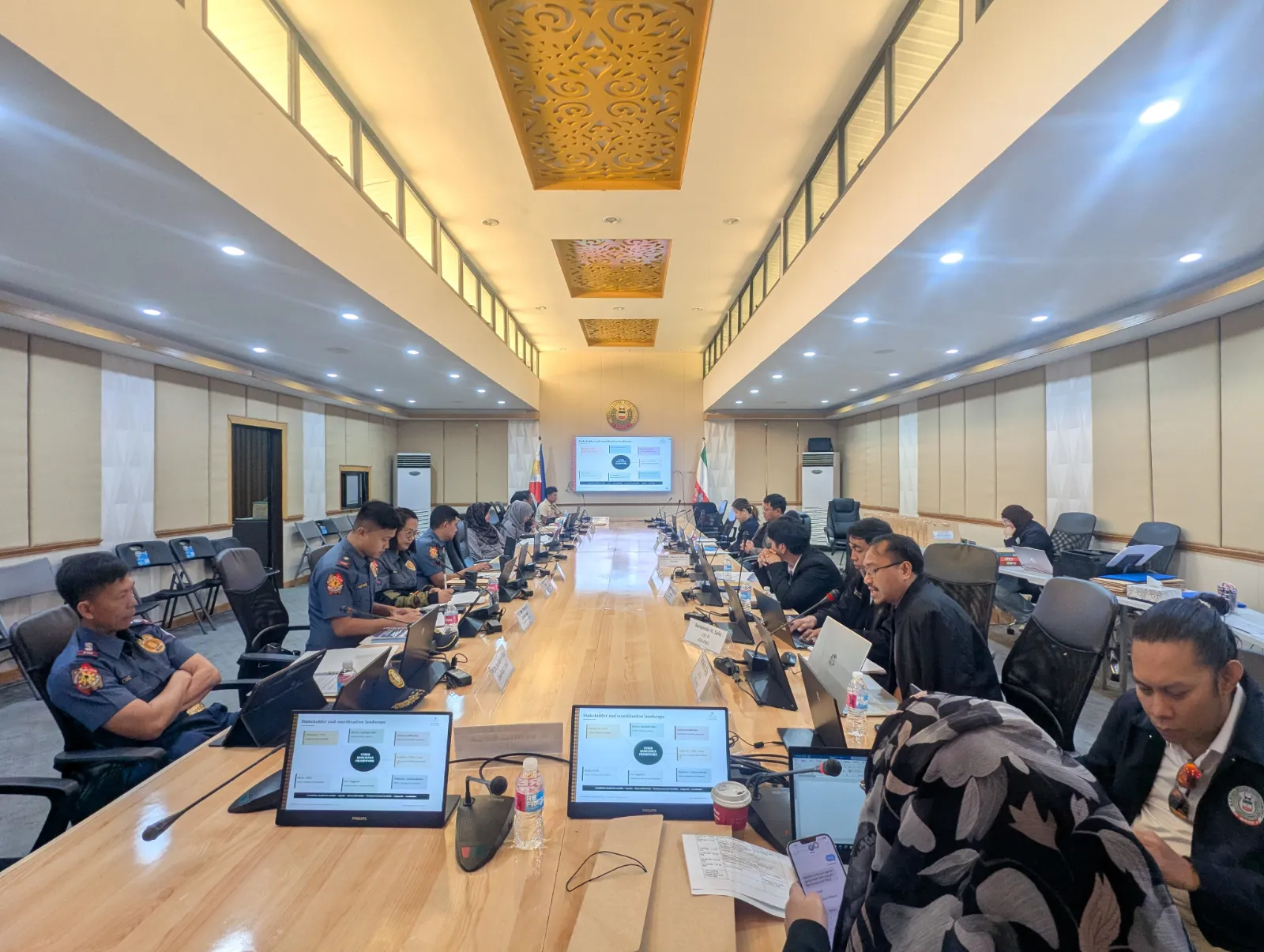
COTABATO CITY — Regional law enforcement and government agencies convened in a focus group discussion to heavily amend the proposed "Bangsamoro Cyber Resilience and Digital Safety Act of 2026," calling for massive fines for tech platforms, precise legal definitions of deepfakes, and an immediate interim cybersecurity framework.
During the consultation, the PNP Anti-Cybercrime Group (RACU-BAR) criticized the draft's lenient wording on platform accountability. The agency proposed mandatory compliance for all digital platforms operating within the region, a strict 12-hour takedown window for malicious content upon council order, and administrative fines reaching up to ₱5 million.
Backed by the National Bureau of Investigation (NBI-BARMM), police officials stressed the need to legally lock down definitions for AI-generated impersonations and "malinformation" to prevent arbitrary interpretation and enforcement loopholes.
Human rights and victim welfare also took center stage. The Bangsamoro Human Rights Commission (BHRC) and police Women and Children Protection (WCP) desks advocated for a highly victim-centered approach. Key proposals included physically and procedurally segregated reporting mechanisms for women and minors, the explicit prohibition of child sexual abuse materials (CSAM), and the expansion of the bill to cover online gender-based violence and cyberbullying.
To bridge the gap before the bill becomes law, the Bangsamoro Information and Communications Technology Office (BICTO) recommended that the Chief Minister issue an immediate Executive Order to create an interim cyber defense framework. BICTO, presenting real-world local hacking data, also pushed to upgrade the Bangsamoro Cybercrime Emergency Response Team (BCERT) into a centralized regional division.
Stakeholders, including the Ministry of Public Order and Safety (MPOS), universally agreed on the need to clarify agency jurisdictions, harmonize inter-agency intelligence sharing, and establish a centralized "Referral and Service Portal" to ensure constituents across local municipalities have easy access to cybercrime reporting.